Do West Palm Beach, FL Homes Need a Whole-House Dehumidifier?
A whole-house dehumidifier paired with your air conditioning system helps West Palm Beach, FL homeowners control indoor moisture that standard AC units cannot manage alone.
What Makes Indoor Humidity So Hard to Control in South Florida?
Your air conditioner removes some moisture as a byproduct of cooling, but it was not engineered to be a dehumidifier. When outdoor humidity in West Palm Beach regularly exceeds eighty percent during summer, the volume of moisture entering your home through doors, windows, and the building envelope overwhelms what the AC can pull from the air. The result is indoor humidity that stays above sixty percent even while the system runs.
High indoor humidity creates problems you can see and feel. Condensation collects on windows and cold surfaces. Wood trim and cabinetry swell and warp. Fabrics and leather develop a musty smell. Behind the walls, moisture feeds mold colonies that can spread through drywall and insulation before you notice any visible staining. If you have been dealing with persistent dampness, dehumidifier installation in West Palm Beach addresses the root cause rather than the symptoms.
Newer homes built with tight building envelopes sometimes trap even more moisture inside because there is less natural air exchange. Older homes with leaky ductwork pull humid attic or crawlspace air directly into the living space. Either scenario benefits from dedicated humidity control that operates independently of the cooling cycle.
How Does a Whole-House Dehumidifier Work With Your AC?
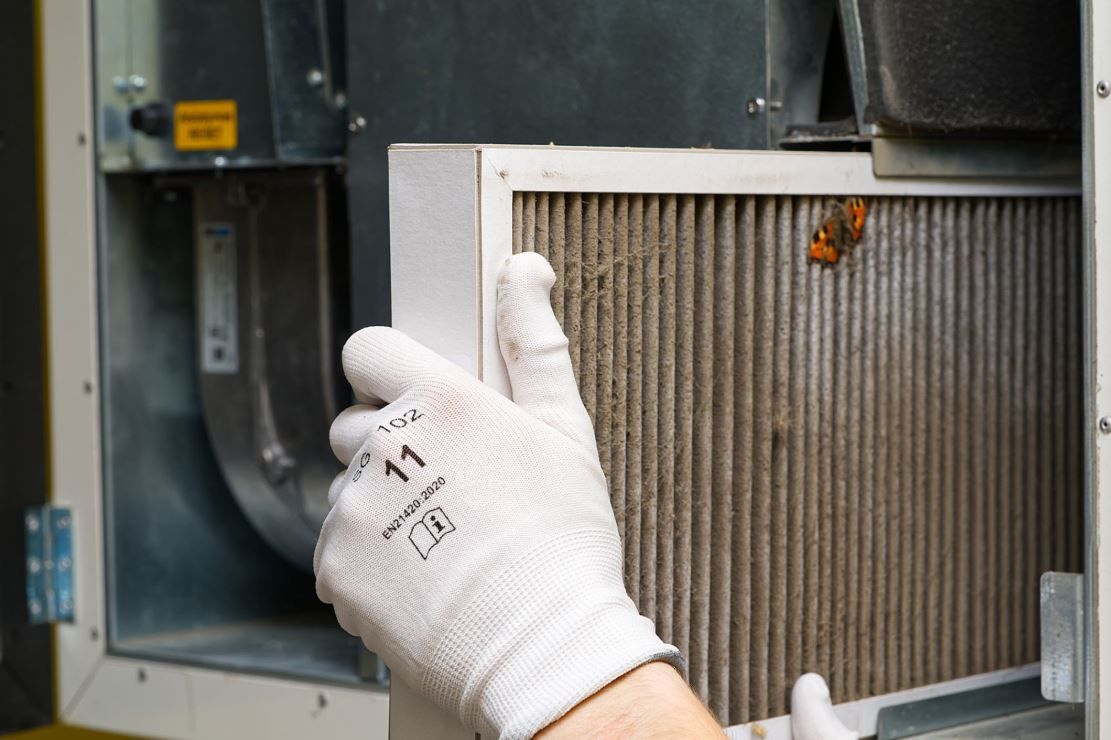
A whole-house dehumidifier installs directly into your existing ductwork and works alongside your air conditioning system. It draws air from the return duct, passes it over a cold coil to condense the moisture, and returns drier air to the supply duct. The condensate drains to the same line your AC uses, so there are no buckets to empty or portable units to move from room to room.
The key advantage is independent operation. Your AC cycles on and off based on temperature, but humidity does not follow the same schedule. A dedicated dehumidifier runs whenever the humidity sensor detects levels above your set point, even if the AC is off. That means consistent moisture control around the clock without overcooling your home. John C. Cassidy Air Conditioning and Plumbing has been installing these systems across Palm Beach County since 1960 and sizes each unit to match the home's square footage and ductwork layout.
Properly controlled humidity also lets you set your thermostat a degree or two higher without sacrificing comfort. Dry air feels cooler at the same temperature, so you get the same level of comfort with less cooling demand. That translates to lower energy consumption during the months when your AC runs the hardest.
Can You Spot the Signs of Excess Humidity in Your Home?
Foggy windows on mild mornings are one of the earliest indicators. If condensation appears on the inside of your glass when the outdoor temperature is above seventy degrees, the indoor moisture level is too high. Musty odors in closets, bathrooms, or laundry rooms are another clear signal, especially if the smell persists after cleaning.
Allergy symptoms that worsen indoors often point to humidity-related issues as well. Dust mites thrive when relative humidity stays above fifty percent, and mold spores multiply rapidly above sixty percent. If your family experiences more sneezing, congestion, or eye irritation at home than outdoors, excess moisture may be a contributing factor. Improving your indoor air quality in West Palm Beach often starts with getting humidity under control before addressing filtration or purification.
Peeling paint, bubbling wallpaper, and soft spots in drywall are advanced symptoms that indicate moisture has been elevated for an extended period. By the time these signs appear, remediation may be needed alongside the installation of humidity control equipment.
Does West Palm Beach's Climate Make Dehumidifiers More Important Than in Other Regions?
West Palm Beach sits in a subtropical zone where average relative humidity stays above seventy percent for roughly ten months of the year. Even during the drier winter months of December through February, humidity rarely drops below fifty-five percent for more than a few consecutive days. That year-round moisture load sets this region apart from areas where dehumidifiers are only useful during a brief summer season.
Afternoon thunderstorms between June and October add another layer of challenge. A single storm can push outdoor humidity to ninety-five percent in minutes, and that moisture seeps indoors through every gap in the building envelope. Homes near the Intracoastal Waterway or within a few miles of the Atlantic coast face even higher baseline humidity because of constant moisture coming off the water.
The local housing stock also plays a role. Many West Palm Beach neighborhoods feature concrete block construction with stucco exteriors, which resists wind damage well but does not breathe the way wood-framed walls do. Without adequate ventilation and dedicated moisture control, that construction style can trap humidity inside the wall cavities and living spaces. A whole-house dehumidifier sized for the home and integrated with the existing HVAC system provides the most reliable solution for consistent comfort throughout the year.