If you have ever been the last person in your household to shower in the morning, you already know the frustration of a traditional water heater. You are met with a sudden, icy wake-up call because the massive, 50-gallon metal cylinder in your basement or garage has run completely out of hot water.
For decades, standard storage tank water heaters were the only realistic option for homeowners. They work by continuously heating a large volume of water 24 hours a day, keeping it hot and ready whether you are using it or not.
Tankless water heaters, often called "on-demand" or "instantaneous" water heaters, take a completely different approach. Instead of storing hot water, they heat it instantly as it flows through the unit.
If you are trying to decide whether to stick with a traditional tank or make the switch, this comprehensive guide will break down how tankless systems work, look at the honest pros and cons, and help you determine if it is the right financial and practical choice for your home.
How Does a Tankless Water Heater Work?
To understand why these systems are so efficient, it helps to understand the mechanics. Traditional tanks rely on standby heating. They use electricity or gas to keep 40 to 60 gallons of water hot all day and night. When you turn on a faucet, hot water is drawn from the top of the tank, and cold water enters the bottom to be heated.
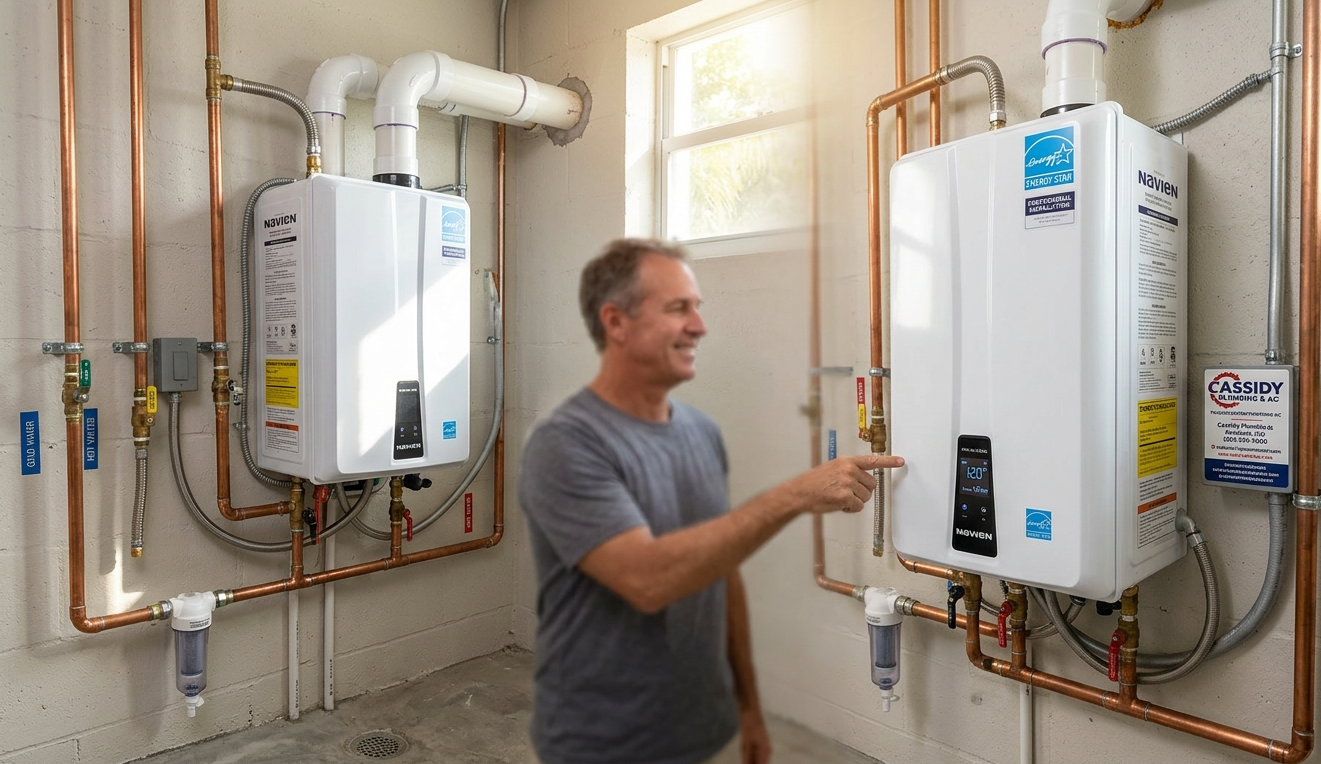
A tankless system eliminates the storage tank entirely. The compact unit hangs on a wall, occupying a fraction of the space.
When you open a hot water tap anywhere in your home, the process follows a highly efficient sequence:
- Flow Sensor Activation: The system detects water moving into the unit.
- Energy Activation: A computer automatically ignites a gas burner or turns on electric heating elements.
- Heat Exchange: Cold water circulates through a heat exchanger—a series of tightly coiled pipes surrounded by intense heat.
- Instant Delivery: The water absorbs the heat instantly and exits the unit at your precise target temperature, delivering a continuous stream of hot water.
Because the heating stops the exact second you turn off the faucet, the system consumes zero energy when hot water isn't actively being used.
The Core Advantages of Going Tankless
Making the transition to an on-demand system offers several distinct advantages that can significantly improve your daily routine and lower your long-term household expenses.
1. Endless Hot Water on Demand
The most popular benefit is simple: you will never run out of hot water. Because the system heats water continuously as long as a tap is open, the tenth person to shower will get the exact same water temperature as the first person. This is an absolute game-changer for large families or households that love back-to-back showers, deep soaking tubs, or running the washing machine while someone is bathing.
2. Drastic Energy and Utility Savings
Traditional water heaters suffer from standby heat loss. They constantly cycles on to reheat the water inside the tank, even if you are asleep or away on vacation. According to the U.S. Department of Energy, for homes that use 41 gallons or less of hot water daily, demand water heaters can be 24% to 34% more energy-efficient than conventional storage tank water heaters. If you have a high-use household, you can still realize an efficiency boost of 8% to 14%.
3. Maximum Space Savings
Traditional water heaters are massive, bulky cylinders that take up valuable real estate in closets, utility rooms, basements, or garages. A tankless unit is about the size of a small suitcase. Because it is securely mounted directly to a wall, it frees up significant floor space that you can reclaim for storage, shelving, or other appliances.
4. Twice the Lifespan of a Storage Tank
Most traditional tank water heaters last between 8 and 12 years before the internal lining corrodes and risks a catastrophic leak. Tankless units are built with highly durable, replaceable parts that rarely suffer from the same corrosive stress. With basic regular maintenance, a high-quality tankless water heater can easily last 20 years or longer, effectively doubling the lifespan of a standard unit.
5. Reduced Risk of Water Damage
When a traditional 50-gallon tank fails, it frequently ruptures or leaks from the bottom, spilling dozens of gallons of rusty water all over your floors, drywall, and belongings. Because a tankless system holds very little water at any given moment, the risk of a catastrophic, house-flooding leak is virtually eliminated.
The Trade-offs: What to Consider Before Buying
While the benefits are impressive, tankless water heaters aren't a flawless solution for every single home. There are a few logistical trade-offs you should understand before scheduling an installation.
1. Higher Upfront and Installation Costs
The single biggest hurdle for most homeowners is the initial cost. Tankless units themselves cost more than traditional tanks, but the installation is where the price truly diverges. If you are retrofitting an older home, a professional plumber may need to upgrade your gas lines to handle a higher BTU load, install a specialized stainless steel or PVC venting system through your exterior wall, or upgrade your electrical panel to handle a heavy electrical draw.
2. Simultaneous Demand Limits (Flow Rate)
While a tankless system provides endless hot water, it does have a limit on how much hot water it can produce at the exact same time. This is measured in Gallons Per Minute (GPM). If you try to run the dishwasher, the washing machine, and two showers simultaneously, the unit may struggle to supply enough GPM to satisfy every fixture. The water won't run cold, but the water pressure across those fixtures will drop. This is solved by properly sizing the unit to your household needs or installing multiple units.
3. The "Cold Water Sandwich" Effect
When you turn on a hot water tap, turn it off for a minute, and then turn it back on, you might experience a brief, temporary drop in temperature. This occurs because the unit shuts down immediately when you turn off the tap. The water heated during the first cycle moves down the pipe, followed by a small pocket of unheated water before the burner fires back up to heat the next batch.
Is a Tankless Water Heater Right for Your Home?
To determine if a tankless system is worth the investment, take a close look at your current living situation, your budget, and your long-term goals.
A tankless water heater is highly recommended if:
- You plan on staying in your home for at least 5 to 10 years to fully recoup the upfront installation costs through your monthly utility savings.
- Your family frequently runs out of hot water during peak morning routines.
- You are remodeling and desperately need to reclaim the physical floor space occupied by a giant metal tank.
- You want absolute peace of mind against structural water damage caused by a leaking storage tank.
Conversely, if you are planning to sell your home in a year or two, or if you are on a tight budget and need an emergency replacement, a high-efficiency traditional tank might still be the most practical short-term financial move.
Professional Sizing and Installation Matter
You should never buy a tankless unit off the shelf without consulting an expert. Sizing requires calculating your home's peak hot water demand alongside your regional groundwater temperature. Groundwater in northern states is significantly colder than groundwater in southern states, meaning a northern unit has to work much harder to raise the water temperature to a comfortable 120 degrees Fahrenheit. A professional technician will accurately measure these variables to ensure your new system delivers flawless comfort.
When you are ready to explore your options, upgrading to an efficient system requires expert installation to guarantee optimal efficiency and long-term safety. For homeowners looking to make the switch, you can explore dependable options for professional sizing, maintenance, and seamless installation by visiting our specialized
tankless water heaters page. Working with an experienced plumbing professional ensures your gas lines, ventilation, and electrical connections conform to strict local building codes, leaving you with reliable, endless hot water for decades to come.