Different Types Of Heaters and How To Pick Which One Is Best For You
When temperatures drop, the right heater can mean the difference between a cozy home and constant shivering. Choosing wisely also helps you save energy and avoid safety issues.
What Is A Heater?
A heater is any device that converts energy into heat to warm a room, zone, or whole home. Common fuel sources include electricity, natural gas, propane, heating oil, and wood, each with different costs and maintenance needs. Broadly, heaters fall into two categories: central systems that heat the whole house and direct heaters that warm specific areas.
Electric Baseboard Heaters
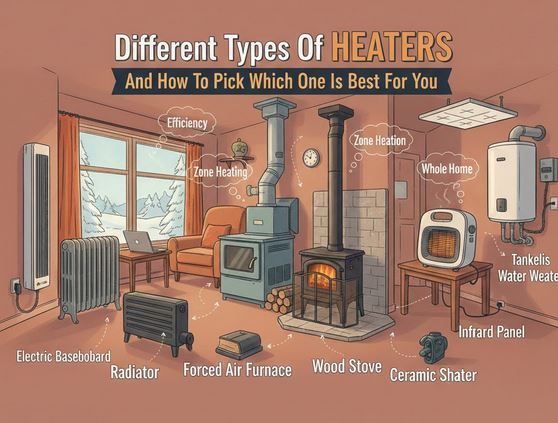
Electric baseboard heaters are long, low-profile units installed along the base of walls and hard‑wired to your electrical system. They use electric resistance elements and metal fins to warm air, which rises naturally into the room while cooler air is drawn in at the bottom. Because each room can have its own thermostat, they are ideal for zone heating in smaller homes or additions.
Pros: Low upfront cost, simple installation, and easy room‑by‑room temperature control. Cons: Electric resistance heat is usually one of the most expensive ways to heat a home over time, especially in poorly insulated spaces.
Radiator And Boiler Systems
Radiators are typically part of a hydronic system, where a boiler heats water and circulates it through pipes to cast‑iron or panel radiators. As hot water flows through the radiator, it releases heat by both radiation and convection, gently warming the room without blowing air. These systems are known for even, comfortable heat and can be easier to “zone” by room with valves and separate thermostats.
Pros: Quiet operation, good air quality because no ducts blow dust and allergens, and high efficiency with modern condensing boilers. Cons: Higher installation cost and slower response time when you adjust the thermostat compared to forced‑air systems.
Forced Air Furnace
A forced air furnace is the most common whole‑home heating system in North America. It burns natural gas, oil, or uses electricity to heat a metal heat exchanger, then a blower pushes warm air through ductwork to supply vents in each room. Modern high‑efficiency furnaces can reach over 90% Annual Fuel Utilization Efficiency (AFUE), meaning most of the fuel becomes useful heat.
Pros: Heats the entire home quickly, shares ductwork with central air conditioning, and supports advanced controls like programmable or smart thermostats. Cons: Duct leaks can waste energy, and blown air may feel drafty or move dust and allergens around the home.
Wood Stoves
Wood stoves burn firewood or pellets inside a metal firebox, radiating heat into the room and often heating nearby surfaces that then warm the air. In rural areas with access to affordable wood, they can significantly cut fuel bills compared to gas or electric systems. Newer EPA‑certified stoves and pellet stoves are designed to burn cleaner and more efficiently than older models.
Pros: Potentially low fuel cost, strong radiant warmth, and continued operation during power outages for many models. Cons: Require regular loading, ash cleaning, chimney maintenance, and can contribute to local air pollution if poorly operated or unregulated.
Ceramic Space Heaters
Ceramic heaters are portable electric space heaters that use a ceramic heating element and often a built‑in fan to distribute warm air. They convert nearly all incoming electrical energy directly into heat, similar to other resistance heaters. Many models include safety features like tip‑over switches and overheat protection, making them popular for spot heating.
Pros: Low purchase price, easy to move from room to room, and perfect for heating a small area without turning up the whole‑home system. Cons: High operating cost per hour compared to gas or heat‑pump systems and limited to small spaces.
Infrared Panels And Radiant Heaters
Infrared panels and radiant heaters warm people and objects directly rather than primarily heating the air. Ceiling or wall‑mounted radiant panels use electric elements that emit infrared energy, so you feel warmth quickly when you are in their line of sight. This style of heating can provide comfort at slightly lower air temperatures, which may reduce total energy use.
Pros: Fast comfort, draft‑free heat, and no ducts or floor space required. Cons: Temperature control can be tricky in some designs, and installation cost may be higher than a simple space heater.
Tankless Water Heaters As Heat Sources
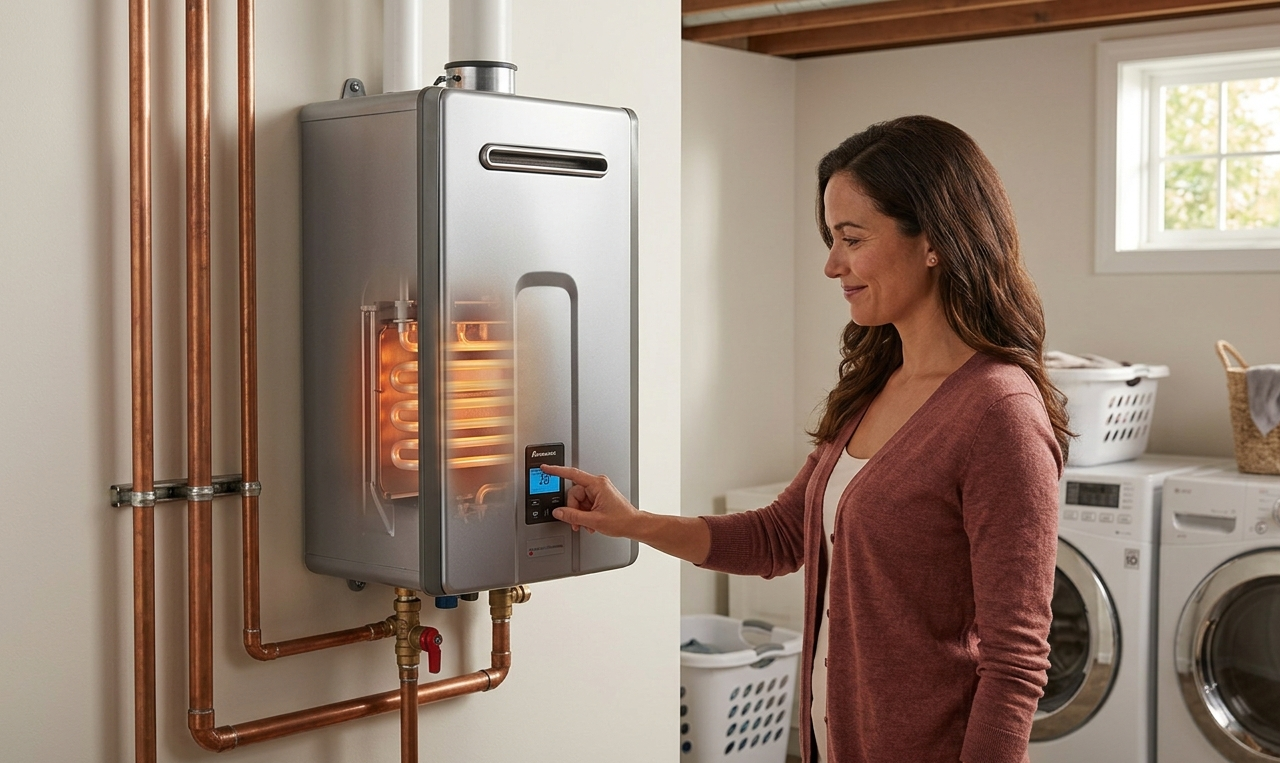
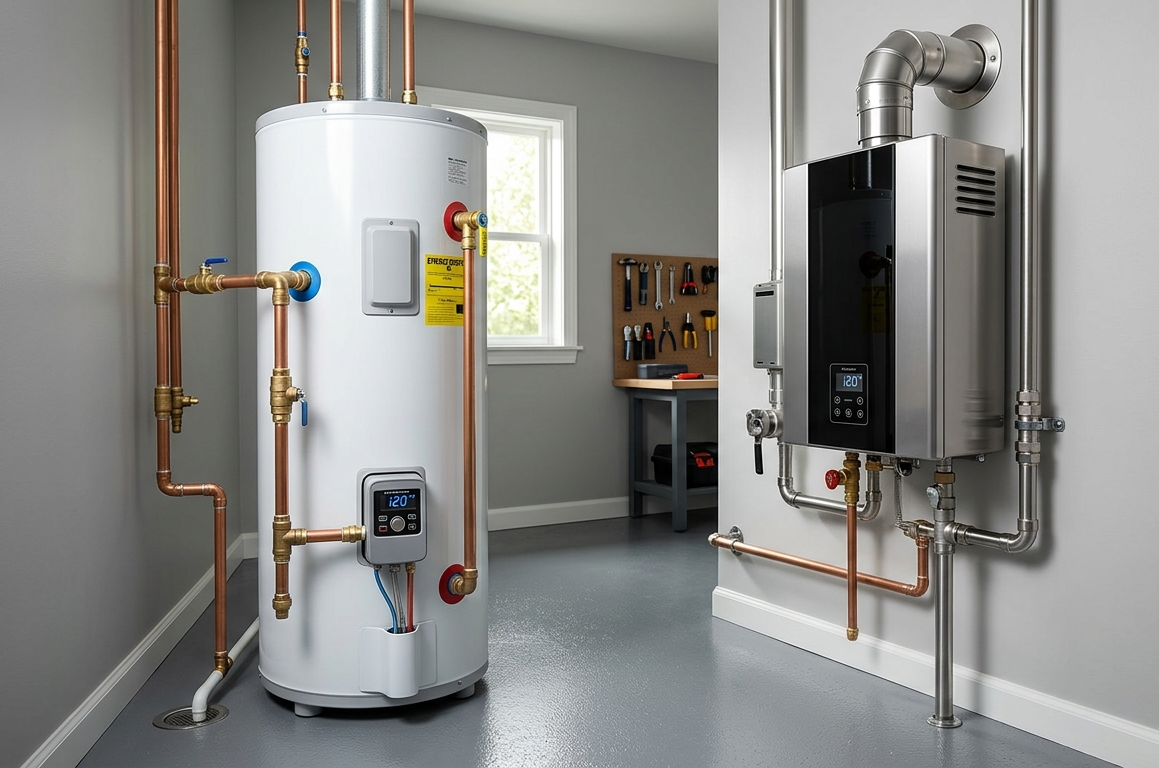
Tankless water heaters primarily provide domestic hot water, but in some setups they can also feed small hydronic heating loops. They heat water on demand, eliminating standby heat loss from stored hot water in a tank. For space heating, they are typically paired with radiant floor or fan‑coil units designed for low‑temperature water.
Pros: Endless hot water for showers plus potential space‑heating support in compact systems. Cons: Not all tankless units are designed for space heating, and improper use can shorten equipment life or reduce efficiency.
Zone Heating vs Whole‑Home Heating
Zone heating focuses warmth on occupied rooms, allowing you to keep unused areas cooler and cut energy use. Electric baseboard, radiant panels, wood stoves, and portable heaters are common zone‑heating tools when used with proper thermostats and controls. Whole‑home systems like forced‑air furnaces or boilers distribute heat throughout the house, typically controlled by a central thermostat.
Many modern central systems can be upgraded with zoning controls that divide the house into separate areas, each with its own thermostat and duct or valve dampers. This approach provides the comfort of whole‑home heating with the efficiency of targeted zones, especially in multi‑story or irregularly shaped homes.
Key Factors When Choosing The Best Heater
Selecting the right heater starts with understanding your space, climate, and budget.
Important factors include:
Heating load and room size: Larger or open‑plan areas may need a central system or high‑capacity stove, while small rooms can often be served by baseboard or portable heaters.
Energy efficiency: Look for AFUE ratings for furnaces, efficiency labels on boilers, and modern controls like programmable thermostats to reduce operating costs.
Fuel availability and price: Natural gas may be cheapest where pipelines exist, while wood or electricity could make more sense elsewhere.
Installation and maintenance: Central systems and wood stoves require professional installation and annual service; plug‑in heaters demand less setup but more careful usage.
Comfort and air quality: Radiant and hydronic systems offer steady, draft‑free warmth, while forced air can integrate filtration and humidity control.
Safety Tips For Any Heater
Regardless of type, safe operation is essential to prevent fires and health hazards. Portable electric heaters should be kept clear of curtains, furniture, and bedding, and must be plugged directly into wall outlets rather than extension cords. Gas or kerosene space heaters without proper venting are discouraged or banned in many regions due to risks from combustion by‑products and oxygen depletion.
Wood stoves and fireplaces need regular chimney inspections to avoid creosote buildup and potential chimney fires. All fuel‑burning heaters should be paired with working smoke alarms and carbon monoxide detectors on every level of the home.
Putting It All Together
For whole‑home comfort in most modern houses, a high‑efficiency forced air furnace or boiler system remains a strong choice, especially when combined with good insulation and air sealing. In smaller homes, additions, or single rooms, electric baseboard, radiant panels, or portable ceramic heaters can offer flexible zone heating when used carefully. Rural homeowners with access to affordable firewood may benefit from a modern wood or pellet stove as a supplemental or primary heater.
By matching heater type to your space, fuel options, and comfort preferences, you can create a warm, efficient, and safe home all winter long.