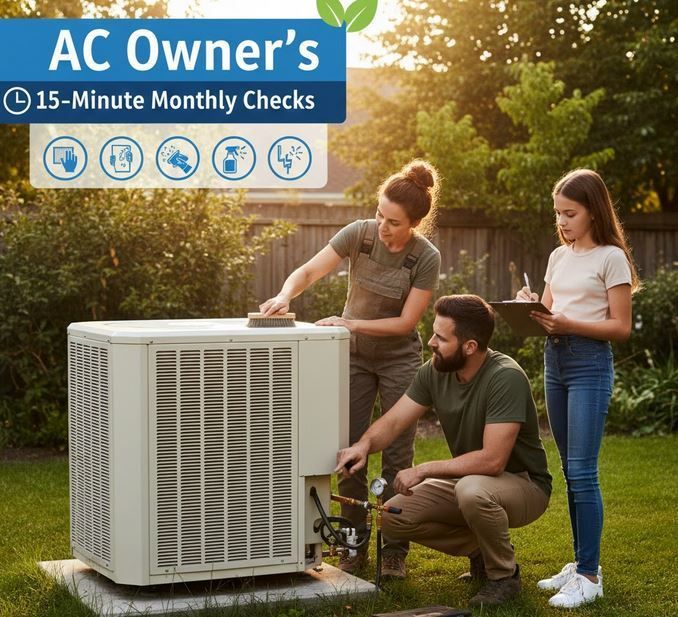
AC Owner’s 15‑Minute Monthly Checks

ac owner

AC Owner can use a simple 15‑minute monthly routine to keep an air conditioner cleaner, safer, and more efficient while reducing surprise breakdowns and repair costs. This quick habit works especially well in hot, high‑use climates like Florida where systems run almost nonstop in summer.


Why Every AC Owner Needs a 15‑Minute Check

AC systems move huge amounts of air and moisture, so dust, pollen, pet hair, and algae build up fast and strain components. A short, consistent check helps AC Owner spot small issues early and keep comfort steady all year.


Key benefits for AC Owner:


Lower energy bills by improving airflow and reducing strain on the compressor.


Fewer emergency breakdowns during peak heat when the system works hardest.


Cleaner indoor air with less dust circulating through the home.


Step 1: Check and Replace the Air Filter

For every AC Owner, the filter is the easiest and most important maintenance item. A clogged filter forces the system to work harder, cuts airflow, and can even cause the indoor coil to freeze.


Monthly filter routine for AC Owner:


Locate the filter at the return grille, air handler, or in a filter slot near the indoor unit.


Slide the filter out and hold it up to the light; if light barely passes through, replace it.


Use the correct size and match or upgrade the MERV rating recommended by the HVAC contractor.


In hot, humid climates or homes with pets and allergies, plan on replacement every 30 days in cooling season.


A clean filter lets the blower move air freely, cuts run time, and helps AC Owner keep rooms more evenly comfortable.


Step 2: Walk‑Around Inspection of the Outdoor Unit

The outdoor condenser needs open, unobstructed airflow to reject heat efficiently. When plants, mulch, or debris crowd the unit, the system runs longer and wears out faster.


Quick 15‑minute visual check for AC Owner:


Make sure power is on, then turn the thermostat to cool and let the system run while inspecting.


Confirm there is at least two feet of clearance around the unit and trim back shrubs or plants if needed.


Remove loose leaves, grass clippings, or trash from the top and sides of the cabinet by hand, not with sharp tools.


Listen for unusual sounds such as grinding, rattling, or buzzing that may signal loose parts or failing components.


In coastal or high‑corrosion areas, AC Owner should also look for rust on the cabinet or coil and note any early signs to bring up during professional maintenance.


Step 3: Clear Vents, Registers, and Returns Indoors

Even with a clean filter, blocked vents starve the system of airflow and create hot and cold spots. AC Owner can quickly correct this with a fast room‑by‑room scan.


Indoor airflow check:


Walk through the home and confirm every supply vent and return grille is open, not shut or covered by rugs or furniture.


Vacuum vent covers and grilles to remove dust buildup that restricts airflow and circulates particles back into rooms.


Avoid closing multiple vents to “force” air to other rooms; this often increases static pressure and stresses the blower.


Good airflow helps AC Owner get the full capacity the system was designed to deliver, reducing run time and energy use.


Step 4: Quick Thermostat and Performance Check

The thermostat is the control center for every AC Owner, and a quick test confirms the system responds correctly. Small thermostat issues can lead to short cycling, poor comfort, and wasted energy.


Simple thermostat routine:


Verify the thermostat is set to cool and the temperature is several degrees below current room temperature so the AC runs.


Check that the display is clear and easy to read and replace batteries annually or when low.


After the system runs for about 10–15 minutes, confirm cool air is coming from vents and the indoor temperature is gradually dropping.


If AC Owner notices big differences between thermostat reading and a separate thermometer, or if the system does not start reliably, it is time to schedule professional service.


Step 5: Inspect the Condensate Drain Area

Air conditioners pull moisture from the air and send it out through a condensate drain line, which can clog with algae and debris. A blocked drain often shows up as water around the air handler or a full drain pan.


Basic monthly checks AC Owner can do safely:


Look around the indoor unit and nearby floor or ceiling area for damp spots, staining, or dripping water.


Confirm the drain line outlet (often near the outdoor unit) is not buried in soil or blocked by debris.


If there is an access tee on the drain line, AC Owner can ask a professional whether routine cleaning with safe methods is recommended between tune‑ups.


Catching drain issues early helps AC Owner avoid water damage, mold growth, and system shutdowns caused by safety switches tripping.


Tasks AC Owner Should Leave to Professionals

While the 15‑minute check is perfect for AC Owner, some important maintenance belongs only to licensed technicians. Handling refrigerant, opening electrical panels, or disassembling components is not safe DIY work.


Professional‑only tasks include:


Measuring refrigerant levels and checking for leaks with proper tools.


Deep cleaning of evaporator and condenser coils beyond light surface debris removal.


Electrical testing, tightening high‑voltage connections, and checking capacitors and contactors.


Full system performance testing with temperature, pressure, and airflow measurements.


Combining AC Owner’s monthly 15‑minute checks with one or two professional tune‑ups per year gives the system the best chance at a long, efficient life.


How AC Owner Can Turn This Into a Habit

The biggest advantage of this routine is its speed: every step fits into a single 15‑minute session once a month. When AC Owner treats it like any other household habit, system performance stays more consistent over time.


Practical habit tips:


Tie the check to a recurring date, such as the first Saturday of every month or the day the utility bill arrives.


Keep a simple note in a phone or on the fridge where AC Owner can log filter changes and observations.


If anything looks or sounds unusual, take photos or short videos to show a technician before scheduling service.


With a consistent 15‑minute monthly routine, AC Owner protects comfort, lowers energy costs, and helps the air conditioner last longer with fewer surprises.

replace AC
By Corey Creekmore January 1, 2026
Replace AC with confidence. Discover 5 key signs it’s time to replace your AC, cut energy costs, avoid constant repairs and keep your home cool and comfortable.
By Corey Creekmore December 24, 2025
AC Repair in West Palm Beach: 7 Signs You Should Call Before Your System Fails
slow drain
By Corey Creekmore December 17, 2025
Learn how to tell simple clogs from real sewer problems, spot early warning signs, and know when a slow drain becomes a plumbing emergency.
By Team John C. Cassidy AC and Plumbing December 13, 2025
Find reliable water heater service in Jupiter. Local insights and tips to help Jupiter homeowners make informed decisions about water heater service.
By Corey Creekmore December 11, 2025
Avoid these 7 costly mistakes Palm Beach homeowners regret most. Learn how to protect your home, save money, and prevent expensive repairs.
By Corey Creekmore December 4, 2025
Salt air and year-round humidity in Palm Beach County quietly wear down air conditioners faster than almost anywhere else in Florida, but homeowners can dramatically extend system life with the right protection habits and professional maintenance. This article walks through how salt air damages your AC, the warning signs to watch for, and practical steps to protect your coastal system so it keeps your home comfortable and efficient for years.​ Life on the Coast Is Tough on AC Systems Living in Riviera Beach, Palm Beach Gardens, Jupiter, West Palm Beach, and the surrounding coastal areas means your AC runs long hours in hot, humid, salty air. The same sea breeze that makes the area so attractive also carries fine salt particles that settle on metal surfaces—including your outdoor AC unit.​ Those salt particles mix with moisture in the air and create a thin, corrosive film on coils, fins, and cabinet surfaces. Over time, this film eats away at metal, reduces efficiency, and can shave years off the life of an unprotected system compared to one operating farther inland.​ How Salt Air Damages Your AC Salt air doesn’t destroy a system overnight; instead, it causes slow, progressive damage that often goes unnoticed until performance drops or a major repair is needed. Understanding what is happening inside and outside your unit makes it easier to spot problems early and plan smart protection.​ On the outdoor unit, salt and moisture cling to the condenser coils and aluminum fins, causing pitting, corrosion, and flaking that restrict heat transfer. When coils cannot release heat properly, your system runs longer, uses more energy, and struggles to keep the home comfortable—especially on the hottest, stickiest days.​ Key Components at Risk in Coastal Homes Several AC components are particularly vulnerable in Palm Beach County’s salt-heavy environment. When these parts begin to corrode or fail, you may notice rising energy bills, unusual noises, or uneven cooling throughout the home.​ Condenser coils and fins: Corrosion on fins reduces airflow and heat transfer, forcing the compressor to work harder and increasing the risk of breakdowns.​ Refrigerant lines and copper tubing: Salt corrosion can eventually lead to pinhole leaks, loss of refrigerant, and expensive repairs or replacement.​ Cabinet, fasteners, and structural parts: Rust on panels, brackets, and screws weakens the unit physically and can expose internal components to more salt and debris.​ Electrical connections and control boards: Moist, salty air accelerates oxidation on terminals and circuit boards, increasing the risk of shorts, failures, and intermittent operation.​ The Role of Humidity and Coastal Weather Palm Beach County’s climate combines high humidity, frequent storms, and long cooling seasons, all of which increase stress on your AC system. High humidity means your unit must remove large amounts of moisture from indoor air every time it runs, adding workload and wear to components.​ Outdoors, repeated wet and dry cycles—morning dew, midday sun, afternoon storms—keep salt and moisture cycling on and off metal surfaces, which speeds up corrosion. Sand and fine debris carried by wind can also lodge in coil fins, trapping salty moisture and making corrosion even worse if the unit is not kept clean.​ Signs Your Coastal AC Is in Trouble Because corrosion and salt damage often start small, early warning signs are easy to ignore until performance problems become obvious. Watching for subtle changes helps you schedule service before minor issues turn into major failures or a complete system replacement.​ Common red flags for coastal AC systems include: Visible rust or white crusty deposits on the outdoor unit, especially on coils and screws.​ Rising electric bills even though thermostat settings and usage habits have not changed.​ Longer run times, warm or uneven rooms, or a system that cycles frequently without keeping up.​ New rattling, buzzing, or grinding noises from the outdoor unit that suggest failing fans or corroded parts.​ Musty odors indoors, excess humidity, or recurring mold around vents and windows, indicating the system is struggling to dehumidify.​ If you notice more than one of these symptoms, the system likely needs a professional inspection to check coils, refrigerant levels, electrical connections, and overall condition.​ Simple Homeowner Habits That Help While coastal corrosion cannot be eliminated completely, consistent homeowner care can slow it down and preserve performance between professional visits. These small, routine actions are especially valuable for homes close to the Intracoastal or the beach, where salt exposure is highest.​ Keep the area around the outdoor unit clear by trimming plants and removing debris so air flows freely and moisture can evaporate.​ Rinse the outdoor cabinet gently with fresh water periodically (not high pressure) to remove surface salt and dirt, especially during peak season.​ Check that the unit sits level and that the slab or pad drains properly so water does not pool beneath or around the cabinet.​ Change or clean air filters on schedule—often monthly during high-use months—to protect indoor coils and maintain airflow for proper dehumidification.​ Inside, keeping supply and return vents unblocked, monitoring humidity, and promptly addressing any signs of condensation or moisture staining will also support system performance.​ Why Professional Coastal Maintenance Matters In a coastal climate like Palm Beach County’s, professional maintenance is not optional—it is the main line of defense against salt, humidity, and premature AC failure. Regular tune-ups allow technicians to catch corrosion early, clean sensitive components safely, and recommend upgrades that match local conditions.​ A thorough coastal maintenance visit typically includes rinsing or cleaning condenser coils, inspecting fins for damage, checking refrigerant lines for corrosion, and testing electrical connections for signs of oxidation. Technicians also verify airflow, inspect drain lines for clogs or algae, and confirm that the system is dehumidifying correctly, which is critical for indoor comfort and mold prevention.​ Protective Upgrades for Palm Beach Homes Some systems and homeowners benefit from additional protections designed specifically for coastal environments. These upgrades can add years of life to a system and reduce the risk of surprise breakdowns during peak heat.​ Options to discuss with a trusted local contractor include: Corrosion-resistant or “coastal rated” outdoor units with enhanced coatings, hardware, and materials built to withstand salt exposure.​ Professional coil coatings applied to existing equipment, when appropriate, to create a barrier between salt and metal surfaces.​ Strategic placement or shielding that keeps equipment out of direct salt spray and reduces exposure to wind-driven rain and sand.​ Upgraded filtration and duct sealing for homes where sand, dust, or unconditioned attic air is frequently pulled into the system.​ For properties very close to the water, more frequent maintenance—often twice a year plus occasional fresh-water rinses—may be recommended to keep salt buildup under control.​ Protecting Indoor Air Quality in a Coastal Climate Salt damage mainly affects outdoor components, but the consequences show up indoors as comfort and air quality issues if the system can’t do its job effectively. When coils are dirty or corroded and airflow is restricted, the AC struggles to remove moisture, allowing mold and mildew to thrive in damp areas of the home.​ Keeping your system clean and well-maintained supports better humidity control, which reduces musty odors, helps protect furnishings and finishes, and creates a healthier environment for family members with allergies or respiratory sensitivities. In some cases, homeowners may also benefit from added indoor air quality solutions, such as improved filtration or supplemental dehumidification, tailored to local conditions and home design.​ When to Repair and When to Replace Coastal systems often reach the repair-or-replace crossroads sooner than inland units because of accelerated wear and corrosion. Deciding what to do depends on age, extent of corrosion, repair history, and how close the home is to the coast.​ As a general guideline, if an older system has significant coil corrosion, repeated refrigerant leaks, or multiple costly repairs within a short period, replacement with a more efficient, salt-resistant model may be the smarter long-term investment. For newer systems with isolated corrosion or minor performance issues, targeted repairs combined with improved maintenance and protective measures can often restore reliable operation.​ The Cassidy Way for Coastal Comfort Homeowners in Palm Beach and Martin counties benefit from working with a contractor experienced in local coastal conditions and familiar with how salt, storms, and humidity affect real-world systems. A family-owned company with decades of experience in the region can design maintenance plans and system upgrades around the realities of Riviera Beach, Palm Beach Gardens, Jupiter, West Palm Beach, Boca Raton, and nearby communities.​ Round-the-clock service availability, comprehensive AC repair and replacement options, and plumbing and water heater expertise together help protect both comfort and home value in a demanding coastal environment. By combining homeowner habits, professional coastal maintenance, and smart system upgrades, you can keep salt air from winning the battle against your AC and enjoy reliable, efficient cooling season after season in Palm Beach County.
By Team John C. Cassidy AC and Plumbing November 13, 2025
Expert HVAC contractor guidance for Riviera Beach residents. Learn how to choose the right provider and what to expect from quality service.