You open your utility bill and your heart stops. $450. $600. It is $300 higher than it was last month, and significantly higher than your neighbor's. You know you haven't been filling a swimming pool or taking hour-long showers.
This is the classic scenario of the "Silent Leak"—a financial wound that bleeds cash 24 hours a day, undetected. In a high-cost environment like South Florida, ignoring a spiked
water bill is simply not an option. From the oceanfront condos of
Boca Raton to the sprawling equestrian estates of
Wellington, this phenomenon is costing homeowners a small fortune.
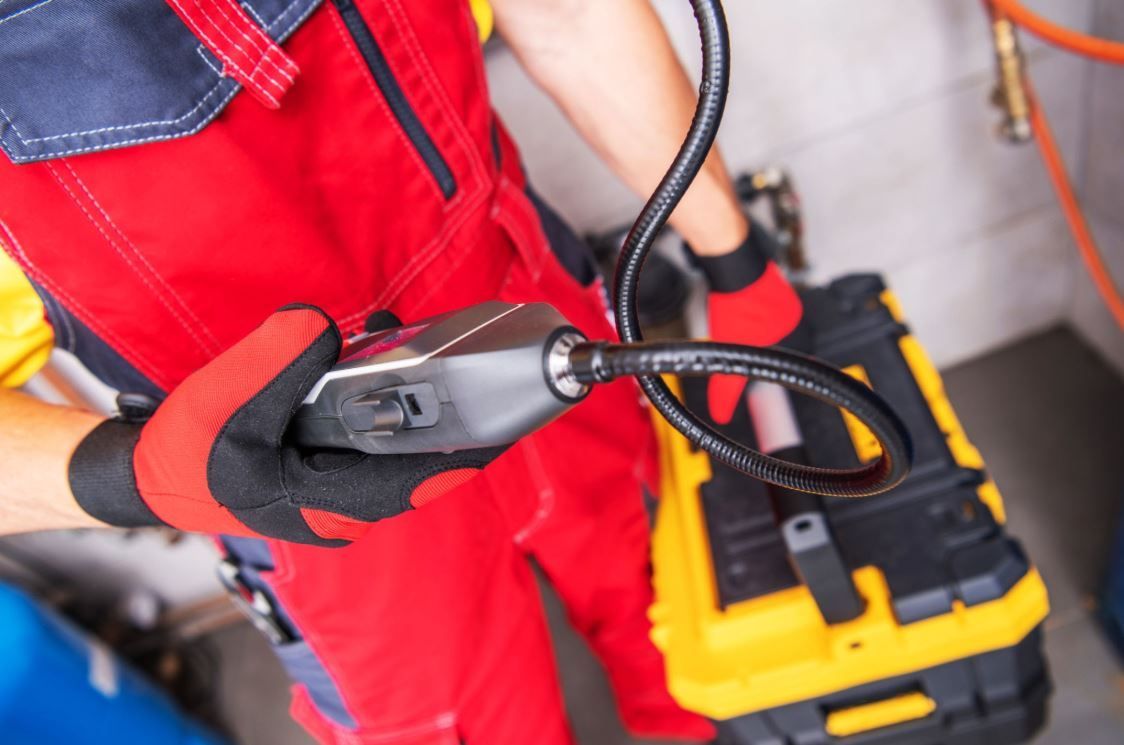
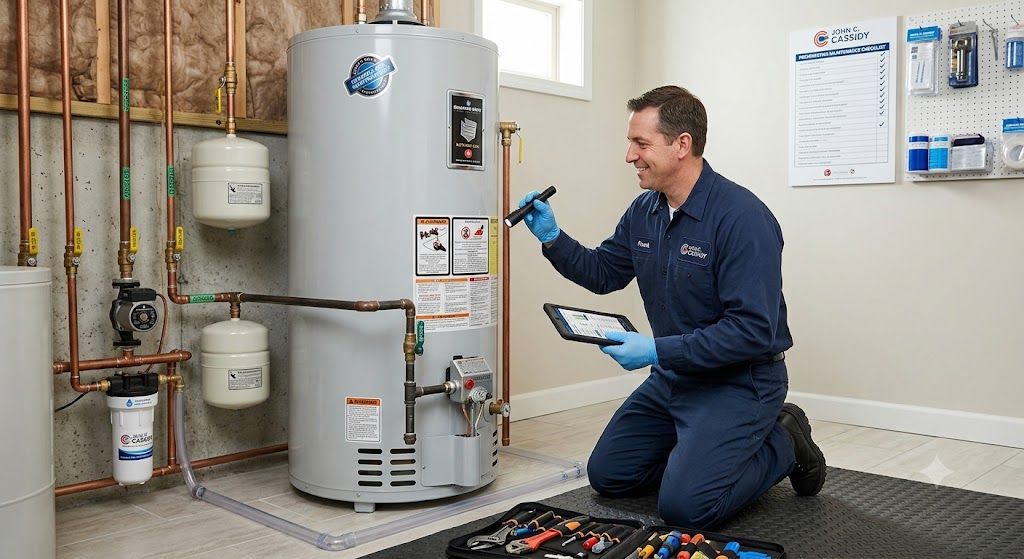
When a standard utility bill doubles or triples without explanation, you are past the DIY "check the faucet" phase. You have a pressurized emergency that requires the diagnostic tools of a licensed
plumber. At John C. Cassidy Air Conditioning, our decades of plumbing experience in
Palm Beach County have shown us exactly where these silent assassins hide.
The Anatomy of the $300 Spike: Where the Water is Actually Going
To understand why your bill is so high, you need to visualize the sheer volume of water lost. A simple toilet "run" might only sound annoying, but it is constantly engaged. If it loses 3 gallons per minute (GPM), that’s over 4,000 gallons a day. Over a 30-day billing cycle, that single silent issue is 120,000 gallons of wasted water.
A $300 increase in your
water bill isn't a drip from a sink; it is a serious loss. In our experience servicing areas like
Palm Beach Gardens and
Boynton Beach, these are the three main villains:
1. The Undetected Toilets: Public Enemy #1
The toilet is, by far, the most common source of silent water loss. It’s a "silent leak" because many modern toilets leak without making a sound. You don't hear the water running.
The culprit is usually the flapper—the small rubber valve at the bottom of the tank that lifts when you flush. Over time, South Florida’s treated water, combined with the extreme heat in attics where some supply lines may run, causes this rubber to degrade or warp. If that flapper does not seal perfectly, water continuously flows out of the tank and down the drain, and the fill valve continuously runs to replenish it.
The $300 Cost: A faulty fill valve/flapper combination can waste thousands of gallons daily. It doesn't need to make the classic "hissing" sound to cost you hundreds of dollars on your
water bill.
2. The Irrigation Nightmare: Wasting Water While You Sleep
In South Florida, we are obsessed with lush green lawns. However, if you are a resident in
Jupiter Island or
West Palm Beach with an extensive irrigation system, this is likely your problem.
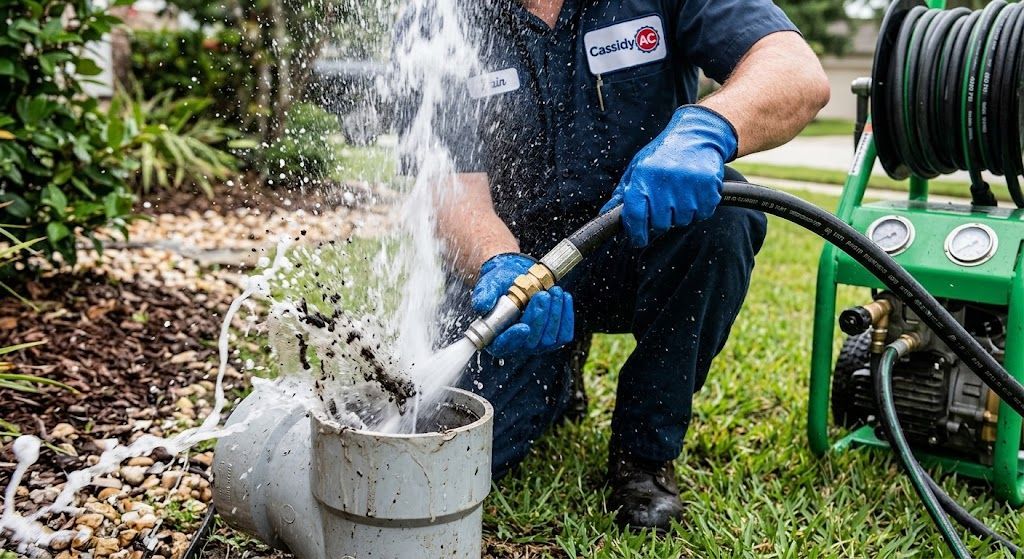
Unlike your indoor plumbing, irrigation leaks happen outdoors, underground, or late at night. A crushed sprinkler head in your
Hobe Sound yard can act like an open fire hydrant during your 3:00 AM watering cycle. Alternatively, the main zone supply pipe underground might have a small crack. This water doesn't pool; the porous Florida sand absorbs it, leaving no surface trace, but massively inflating your
water bill.
The Diagnostic: When our
plumber arrives, we check your water meter while the irrigation is running and compare it to the flow when it is off. We often find that one specific zone is demanding twice the water of the others, isolating the leak.
3. The Slab Leak: The Final Boss of Silent Leaks
This is the diagnosis that every homeowner in
Delray Beach or
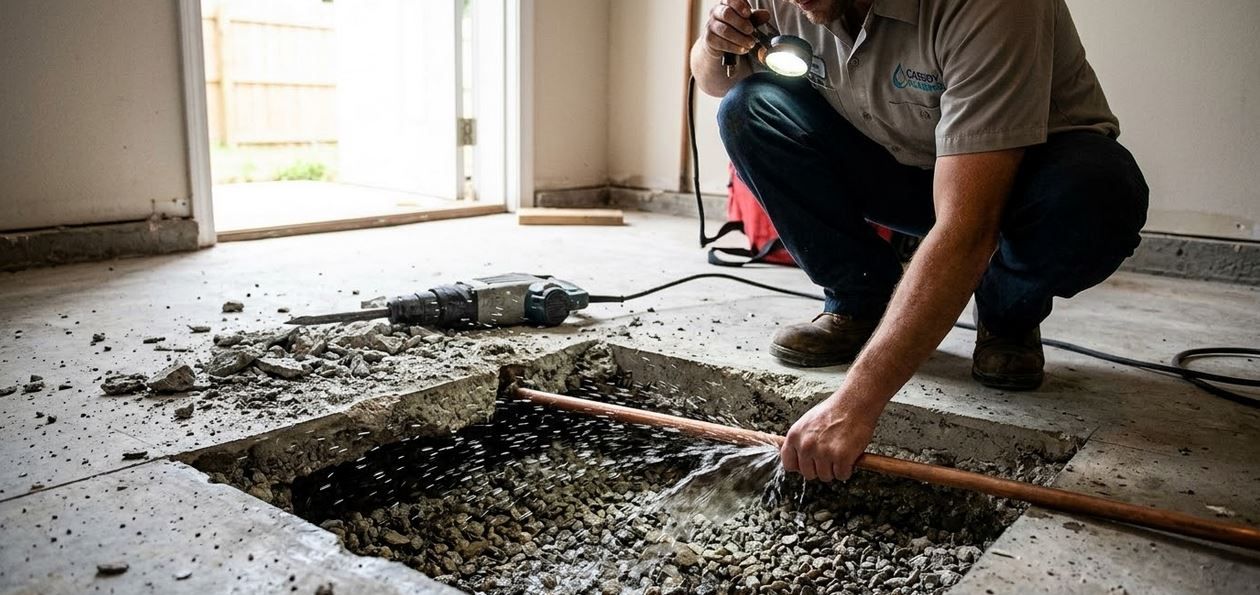
Stuart dreads. In South Florida, most homes are built on a "slab-on-grade" foundation—a solid concrete block. Your main freshwater supply lines run underneath that concrete.
Over time, especially in older homes (predating the 1990s plumbing code changes) or homes in
Martin County built on shifting sands, those copper or galvanized pipes can fail. Ground movement, corrosion from the soil, or simply age causes a leak.
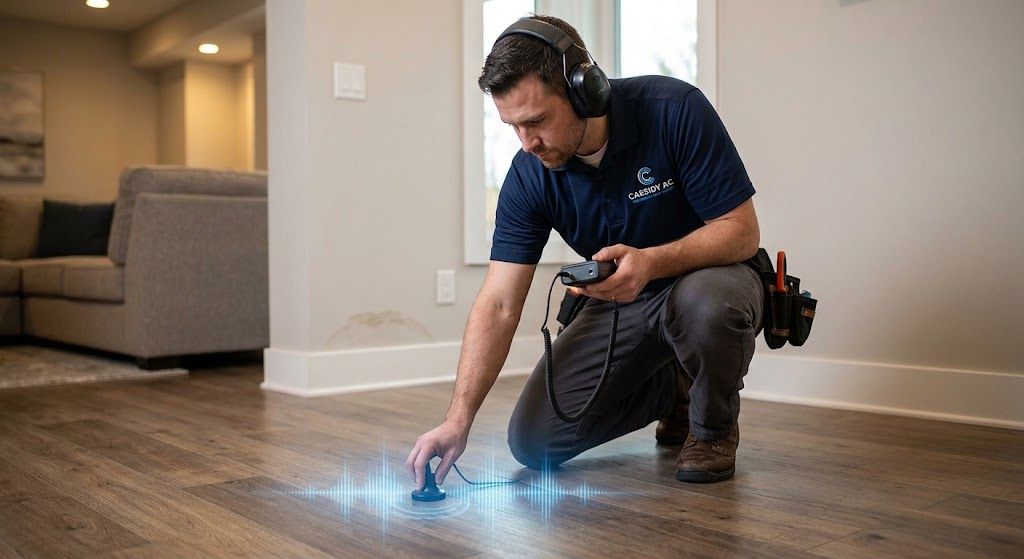
The water pressure is relentless. The leak is silent because the sound is muffled by two feet of concrete and soil. It only becomes "loud" when your
water bill arrives.