It’s a common story in South Florida: The windows are sealed, the air conditioner is humming, and yet, your family is battling a persistent, "mystery" cough. Maybe your eyes are itchy every morning, or there’s a faint, musty smell that perfumes just can’t hide. You’ve deep cleaned the carpets, changed the filters, and dusted every surface, but the symptoms remain.
If this sounds familiar, the culprit may not be on your floor, but above your head and inside your walls.
Your HVAC system is the lungs of your home. In a humid climate like ours, it works tirelessly not just to cool the air, but to dehumidify it. This process inherently creates moisture. When that moisture meets darkness, dust (food), and stillness, you create an ideal ecosystem for biological growth. The resulting HVAC mold releases thousands of microscopic spores into the air every minute, which are then circulated directly into your breathing zone.
So, is your AC making you sick? It is entirely possible. While you might check your standard register vents, mold is an expert at hiding. Here are the five "invisible" mold spots that every homeowner misses, and how they impact your indoor air quality.
1. Deep Inside the Evaporator Coils
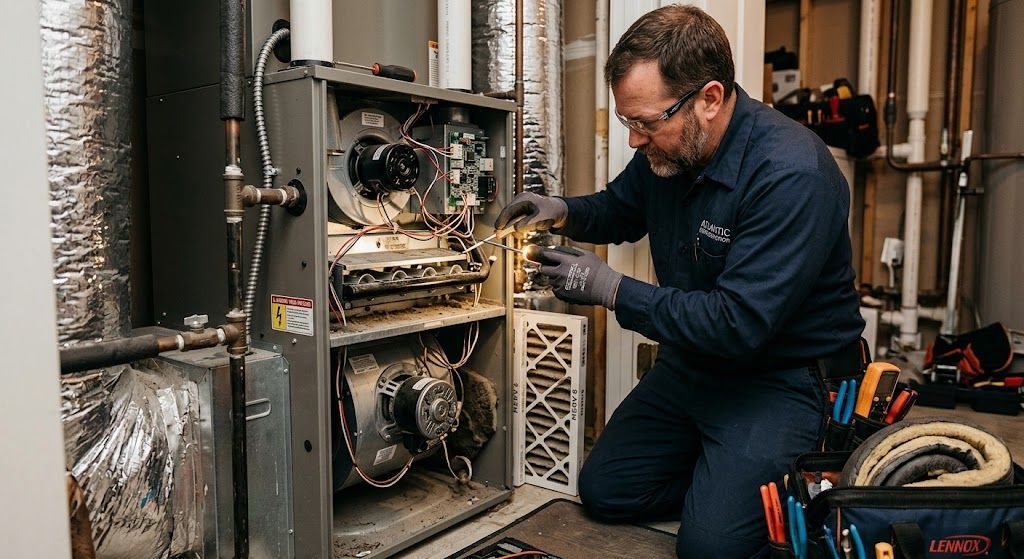
This is the ground zero of HVAC microbial growth, and it is almost entirely invisible to the untrained eye. Your air conditioner’s indoor unit contains the evaporator coil. This coil is filled with freezing refrigerant. As warm, humid home air is blown over these fins, the moisture in the air condenses on the cold metal (think of a cold soda can sweating on a hot day).
Normally, this water drips harmlessly into a drain pan. However, the coil also traps fine dust particles that bypass your air filter. This dust creates a nutrient-rich "soil" on the damp fins. Because the coil is deep inside the dark air handler cabinet, it becomes the perfect incubator.
You cannot see this without dismantling the unit. If you are breathing "dirty sock syndrome" smell (a common descriptor for coil mold), this is likely the source.
2. The Interior Lining of Flex Ductwork
Most modern homes in our area utilize flexible, insulated ductwork (flex duct) hidden in the attic. While efficient, flex duct has a major design flaw if it’s not properly maintained.
The inner core is plastic, but it’s surrounded by fiberglass insulation and an outer silver jacket. Over time, dust accumulates inside the flexible ribbing of the inner core. If your system experiences high humidity (above 60% consistently) or a temperature imbalance in the attic, condensation can form inside the duct itself, saturating the dust.
Because flex duct is porous, the mold can embed itself deeply into the lining. Traditional duct cleaning often cannot resolve this; if mold takes hold here, the affected duct sections must be replaced.
3. The "Secondary" Condensation Drain Pan
Your AC has two lines of defense against water. The primary drain line carries condensation outside. Below the air handler, there is usually a secondary or emergency drain pan, designed to catch overflow if the main line clogs.
In humid regions, this secondary pan often has a shallow layer of standing water that doesn't trigger the overflow switch but is deep enough to grow mold. Many homeowners never check this pan because it’s often in an attic crawlspace or a locked utility closet. Worst of all, this pan sits directly under the air blower, meaning as mold grows there, spores are immediately sucked upward and distributed throughout the house.
A simple visual check and regular cleaning with a safe algaecide in this pan can prevent this massive contamination point.
4. Behind the Supply Plenums (The 'Boot' Connection)
The "plenum" is the main distribution box attached directly to your air handler that feeds all the individual ducts. In Florida, air conditioning contractors sometimes face challenges where they have to fit large plenums into tight attic spaces. If the connection between the plenum and the main unit, or where individual ducts branch off (called the "boot"), is not perfectly sealed and insulated, disaster strikes.
When freezing cold air travels through an uninsulated metal boot in a hot, humid attic, "sweating" (condensation) occurs on the exterior of the metal. This moisture drips onto the surrounding drywall, attic insulation, or wooden structural beams. Mold begins growing outside the ductwork and then eventually eats its way into the system. This often creates localized "musty zones" in certain rooms.
5. Around the Supply Registers and the Drywall Cutout
You’ve likely seen dark, dusty smudges on your ceiling vents. Most people wipe them away and assume it’s just dirt. However, if the metal register (the vent cover) is not tightly sealed to the duct "boot" behind the drywall, an air leak occurs.
This is called "supply air bypassing." The cold conditioned air leaks out behind the register, mixing with the humid attic air right at the ceiling. Condensation forms on the backside of the drywall and on the register itself. This leads to mold growth inside the wall cavity, right at the point where the air enters your room. You are effectively pulling contaminated air from your wall cavity and mixing it with your AC air right at the breathing point.
The Problem: Why It Makes You Sick
The symptoms of
HVAC mold exposure can mimic severe allergies or a persistent cold. This is sometimes referred to as "Sick Building Syndrome." Spores from hidden mold spots can trigger:
Unexplained headaches or fatigue
Persistent coughing, wheezing, or shortness of breath
Nasal congestion and sinus infections
Eye, nose, and throat irritation
Severe asthma attacks in sensitive individuals
Because the source is hidden, people often treat the symptoms rather than the cause, leading to months or years of poor health.
The Cassidy Solution: Professional Diagnostics
If you suspect your AC is making you sick, DIY cleaning is often insufficient and can sometimes worsen the issue by spreading spores. This requires a professional indoor air quality diagnostic.
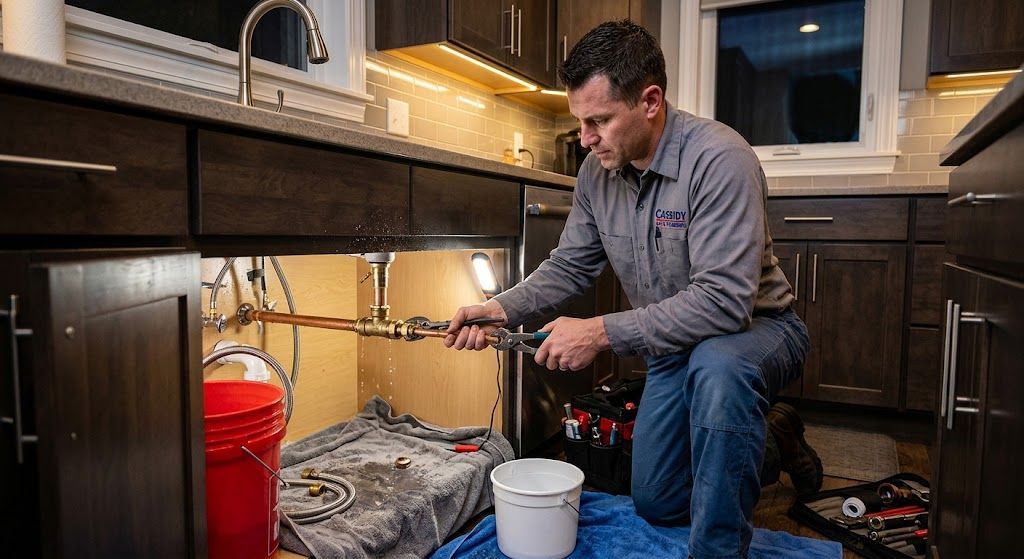
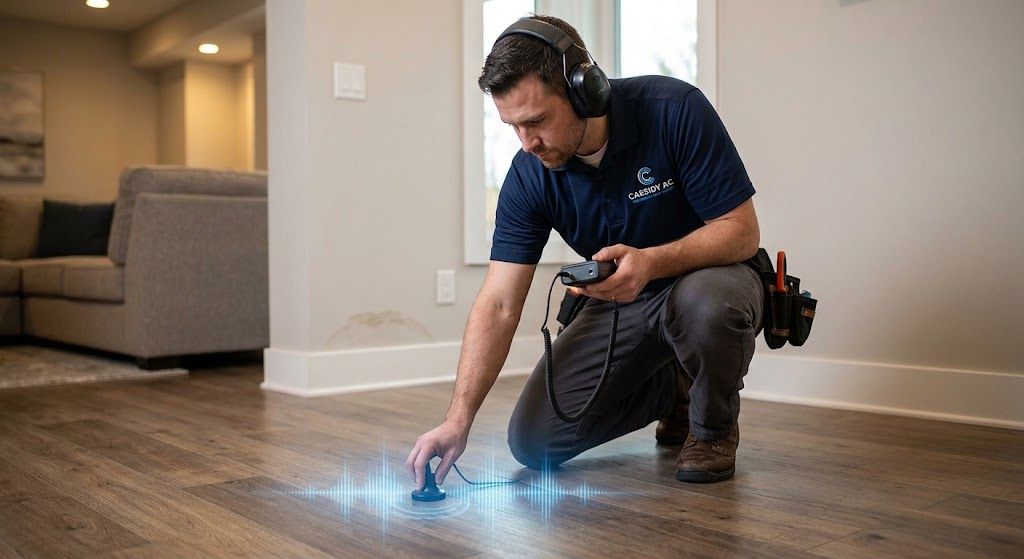
At Cassidy AC & Plumbing, we don't just treat the symptoms; we find the source. Our certified technicians utilize specialized tools—including borescope cameras to inspect deep into ductwork and moisture meters to find hidden attic leaks—to locate the 5 hidden mold spots.
We offer comprehensive solutions, from deep coil sanitation and UV light sterilization (which kills bio-growth on the coil) to full duct system replacement.
Don’t ignore the musty smell or the mystery cough. The air you breathe is too important. Contact Cassidy AC today to schedule a complete Indoor Air Quality audit and breathe easy again.